McAllister Wood Products
Local hardwood slabs, custom-cut lumber, mulch, firewood, and specialty wood products.

Local hardwood slabs, custom-cut lumber, mulch, firewood, and specialty wood products.
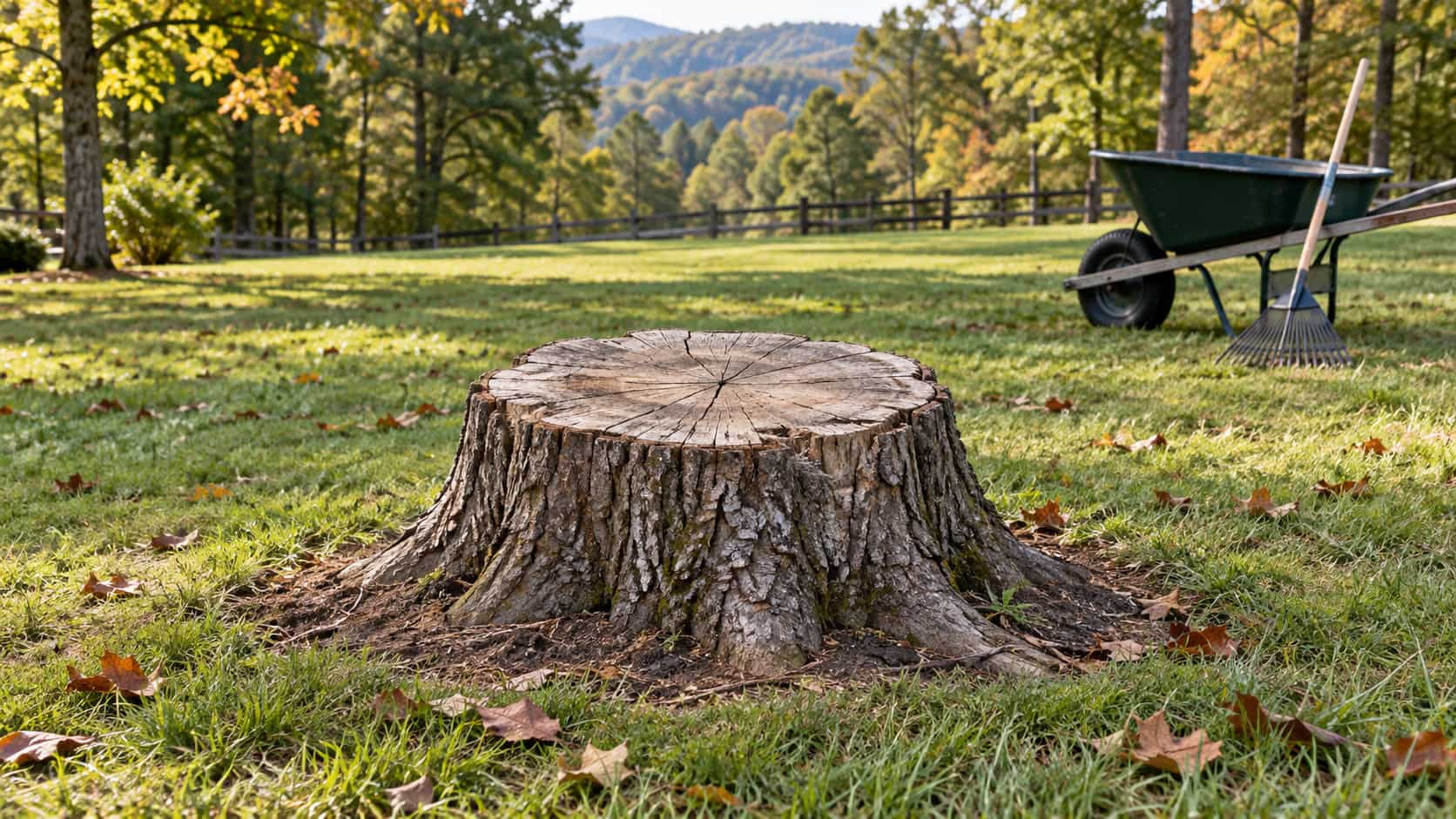
Grinding and full removal leave different ground behind. Here is which one your project needs and how to get the spot ready for grass or a new tree this fall.
Fall is the best time of year to plant a tree or seed a lawn in this part of the country. Soil is still warm, air temperatures are easing, and roots have all winter to spread before summer heat arrives. It is also the season when a lot of people look at the stump left over from a spring removal or a storm cleanup and decide it is finally in the way.
Whether you want to plant a replacement tree, extend the lawn, put in a fence, or just stop steering the mower around it, the right way to deal with a stump depends on what you plan to do with the spot afterward. Here is how grinding and full removal differ, what the ground looks like when each is done, and how to get it ready for what comes next.
Stump grinding uses a machine with a spinning cutting wheel to chew the visible stump and the top of the root crown into wood chips, typically several inches below grade. The large lateral roots stay in the ground and decay over the following years. The result is a shallow cavity partly filled with chips and soil.
Full stump removal means excavating the stump and a substantial portion of the root system, usually with heavier equipment. It leaves a larger hole, disturbs more of the surrounding ground, and costs more. It is the right call when something is going to be built in that exact spot: a foundation, a slab, a retaining wall, a utility trench, or significant regrading.
For most residential situations, grinding is enough. Lawn restoration, a mulch bed, clearing a mowing obstacle, or removing several stumps efficiently are all grinding jobs. Our stump grinding page walks through the process and what affects the price.
A ground stump does not leave a clean, level patch of bare soil. It leaves a depression filled with a mix of wood chips and dirt, often more of it than people expect. A stump two feet across can produce several wheelbarrow loads.
Three things happen in that spot over the next year or two.
Seeding season for cool-season lawns in the region runs from roughly mid-September into October in the Piedmont and a bit earlier in the mountains. If you are overseeding fescue this fall, a ground stump can be part of that project.
Grass roots are shallow, so the old tree roots underneath rarely interfere. The chips are the main issue, and removing them solves most of it.
This is where the plan matters most. Iowa State University Extension’s guidance on replanting after a tree is removed is direct about it: planting a new tree in the exact spot where the old one stood is possible but not advised, because the old roots take up space and the grindings change the soil.
The easier answer is to move over. Planting at least three feet from the old stump, and ideally farther, puts the new tree’s roots in undisturbed soil. A replacement tree does not need to occupy the identical spot to fill the same role in the yard.
If it really does need to go in the same place, the site needs more work. Grind deeper than you would for a lawn, clear out as much of the chip and root material as possible, backfill with good soil, and choose a smaller tree that can establish quickly. Some people wait a full growing season before planting to let the ground settle and the chips break down. If the old tree died of a root disease, replanting the same species in the same spot is a poor bet regardless of preparation, and an arborist can help you pick something more suitable.
Fall planting itself is well supported. UGA Extension notes that a fall-planted tree performs better than a spring-planted one because it establishes roots before summer heat draws moisture from it. The same article covers the basics: check drainage, dig the hole two to three times the width of the root ball and no deeper, and mulch two to three inches without touching the trunk.
A stump does not have to sit in open lawn to be ground. Stumps beside a fence line, tucked against a foundation, or in a planting bed can often be handled with smaller equipment, provided there is a path to get it there. The questions that matter are access and what is underground.
Before scheduling, it helps to know the width of the narrowest gate the machine would need to pass, whether there is irrigation or low-voltage lighting in the area, where the septic tank and drain field are if you have one, and whether any utility lines run nearby. Georgia 811, SC 811, and NC 811 locates are free and worth requesting for any grinding near the front of a lot, since gas and communications lines often run shallower than people assume.
Photos of the stump, the surrounding area, the access route, and the narrowest gate save a lot of back-and-forth and often allow a quote without a site visit.
Depending on the scope you agree on, grindings can be left in the cavity, piled beside it, spread as mulch, or hauled away. Fresh chips make a decent mulch for paths and around established shrubs. They are not a substitute for topsoil, and they should not be spread thick around young plants for the nitrogen reason described above. If you plan to seed or plant in the spot, ask for the chips to be removed or plan to do it yourself.
Grinding can be done in most weather, but the ground behind it needs a few weeks of decent conditions to settle before seed goes down. If you want fescue established before the first hard freeze, that means having the stump handled in the next few weeks. For a spring tree planting, a fall grind gives the ground the whole winter to settle, which is the easier sequence.
Not sure whether your project calls for grinding or something more? Tell us how many stumps you have, what you want to do with the space afterward, and send photos of the stumps and the access route. Request a stump grinding quote and we will help you figure out the right scope.
