McAllister Wood Products
Local hardwood slabs, custom-cut lumber, mulch, firewood, and specialty wood products.
Local hardwood slabs, custom-cut lumber, mulch, firewood, and specialty wood products.
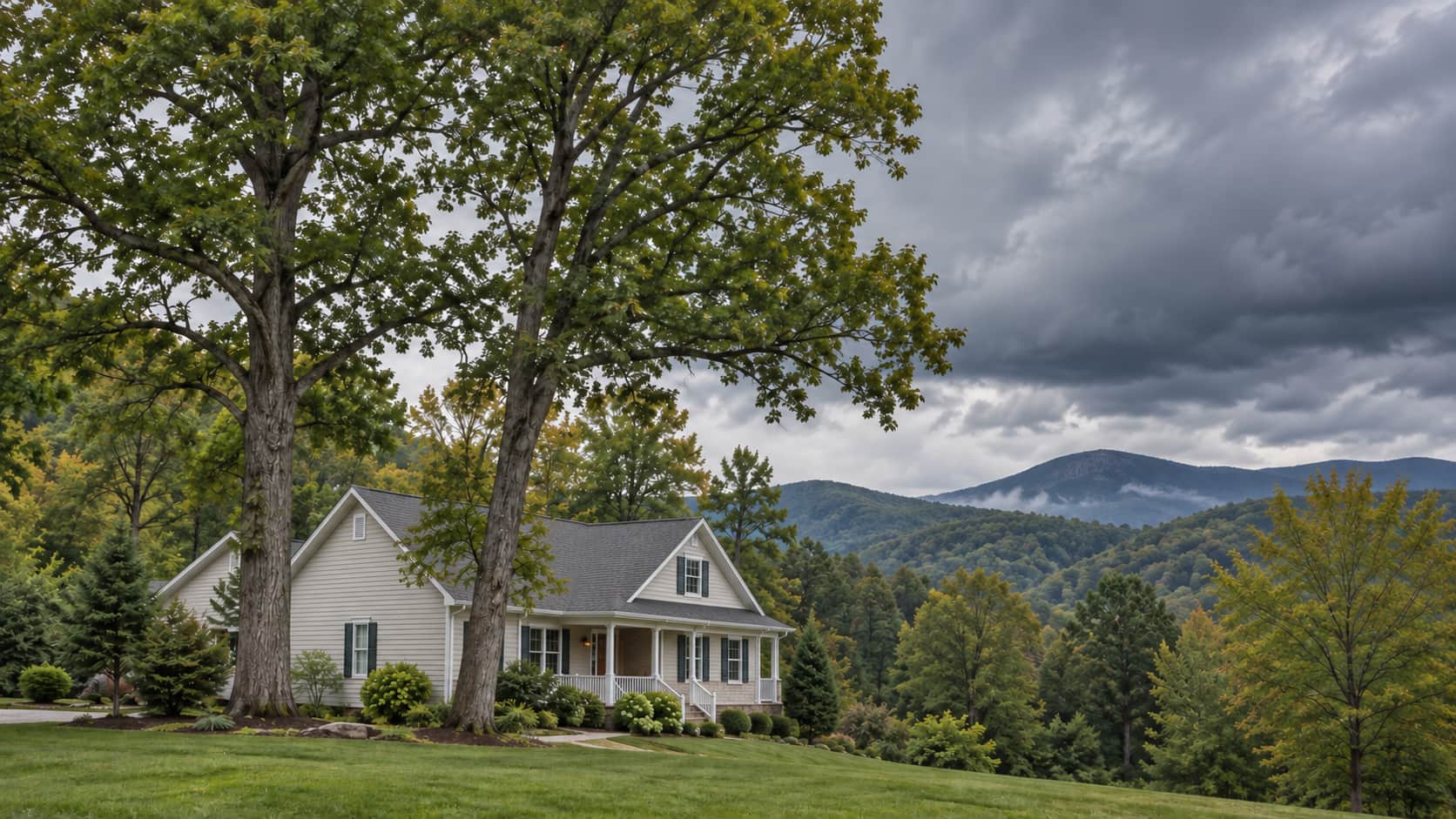
Inland storms bring trees down when wet soil meets a full canopy. Here is what to check in your yard, what pruning helps, and what to leave alone.
The Atlantic hurricane season runs from June 1 through November 30, and the most active stretch falls between mid-August and mid-October. By the time a tropical system reaches Northeast Georgia, Upstate South Carolina, or Western North Carolina, it has usually weakened from its landfall strength. It can still bring down a lot of trees. Helene in late September 2024 is the storm most people here remember, but it does not take a historic event. Several inches of rain followed by a day of steady gusts is enough to expose a tree that was already struggling.
The useful work happens before a storm has a name. Here is what to look at, what a tree service can realistically do ahead of time, and what to leave alone.
Two things usually combine. Rain saturates the soil, which loosens the grip roots have on the ground. Then wind pushes on a canopy that is still in full leaf in September and October. A tree that would stand through the same gusts in January can go over with the root plate attached.
Location changes the picture. Exposed ridgelines, gaps, and lakefront lots tend to take stronger gusts than sheltered coves. Steep lots add slope and shallow soil over rock. In the foothills and lower Piedmont, many neighborhoods were carved out of pine and hardwood stands, and the trees left at the new edges grew up sheltered by neighbors that are no longer there. They often have tall, narrow crowns and less root spread on the cleared side.
This year adds another factor. Much of the region came through a record dry fall and winter, and drought has returned to parts of the area in late summer. Prolonged drought can leave trees carrying more dead wood than usual, and dry, hardened soil can shed the first inches of a heavy rain instead of absorbing it.
You do not need to diagnose anything. You are looking for things that deserve a closer look, from the ground, on a calm day.
Start with what a tree could hit. Arborists call these targets: the house, a bedroom in particular, the driveway, parked vehicles, a propane tank, the service line to the house, a neighbor’s roof. A large tree with a defect in the back woods is a different priority from a medium tree with the same defect over the carport.
Then look at each tree near a target from top to bottom.
Our article on warning signs that a tree may fall covers these defects in more detail, including which ones call for emergency help.
Take photos and jot down what you saw. A dated picture of a lean or a crack is useful later, both for an arborist and for an insurance adjuster.
Good preparatory pruning is targeted. It typically means removing dead, broken, and hanging limbs, shortening overextended limbs back to a suitable side branch to reduce leverage, and correcting structural problems in younger trees while the cuts are still small. Done well, the tree looks much the same afterward, with less weight in the wrong places.
Timing matters too. The Georgia Forestry Commission’s seasonal tree care guidance recommends keeping growing-season pruning light and saving major structural work for winter, when trees are dormant and the branch arrangement is easier to see. Removing deadwood and clear hazards is appropriate any time of year. A larger structural prune on a healthy tree is usually better scheduled for the dormant season, which is only a few months away.
Topping is the big one. Cutting the main limbs of a tree back to stubs to make it shorter feels like it should reduce storm risk. Over time it does the opposite. The International Society of Arboriculture explains in Why Topping Hurts Trees that the stubs decay and the fast, upright sprouts that follow are weakly attached, so a topped tree becomes more likely to shed large pieces, not less.
Stripping out the interior branches so that foliage is left only at the ends of the limbs is a related mistake. It shifts weight to the tips and removes the smaller branches that help damp a limb’s movement in wind.
Removing a healthy tree simply because it is tall is also rarely necessary. Height alone is not a defect. The question is whether the tree has a condition that makes failure more likely and something important within reach.
Sometimes pruning cannot fix the problem. A dead tree within reach of the house, a trunk with advanced decay at the base, a root plate that has already shifted, or a tree that has lost most of its crown are situations where removal is usually the responsible recommendation. Where a tree stands over a roof or in a space too tight to lower pieces safely, crane-assisted removal allows sections to be lifted out instead of dropped.
If you are unsure which category a tree falls in, that is what an arborist assessment is for. The outcome may be pruning, monitoring, removal, or no work at all.
Once a system is three or four days out, tree companies across the region are fielding calls and schedules fill quickly. It is a poor time to start major work, and it is a dangerous time for a homeowner to climb a ladder with a chainsaw. Focus on what you can control.
After the storm, stay clear of anything touching a power line and anything hung up overhead. McAllister provides 24/7 emergency tree service for trees on structures or blocking access, and storm damage cleanup for the larger job of clearing downed trees and debris.
If your walk around the yard turned up dead limbs over the roof, a union that looks like it is opening, or a tree you have simply wondered about for years, it is easier to deal with on a calm week than after a warning is issued. Request a quote and tell us what you are seeing. Photos taken from a safe spot help us understand the situation before we visit.
